

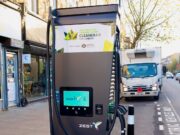























Electric vehicle drivers could face another significant increase in public rapid charging costs next year, with prices potentially reaching £1 per kWh as rising electricity network charges place growing pressure on charging operators.
A new impact assessment published by EV newsletter The Fast Charge, in partnership with charging network Zest, warns that the cost of operating rapid chargers is increasing sharply, threatening both affordability for motorists and investment in the UK’s public charging infrastructure.
The findings form part of the Reverse the Charge campaign, which is calling for urgent reform of electricity grid charging arrangements.
Grid Charges Have Increased Seven fold Since 2021
According to the assessment, the average fixed network charge for a standard rapid EV charger has risen from £61.47 per week in 2021 to £440.13 in 2026.
Based on published tariffs from the UK’s Distribution Network Operators (DNOs) and National Energy System Operator (NESO), the same charger is expected to face fixed charges of £77.39 per day in 2027.
Crucially, these charges apply regardless of whether motorists actually use the charging equipment.
The report estimates that rapid charging operators across the UK will collectively pay approximately £336 million in grid charges during 2026, increasing to £413 million next year, even without additional chargers being installed.
With average rapid charging prices currently around 79p per kWh, the assessment suggests that tariffs approaching £1 per kWh could become increasingly common.
Government Support May Not Reach Rapid Charging Networks
Although the Government announced £100 million in its 2026 Budget to help reduce EV charging costs, the funding is directed towards local, lower-powered charging infrastructure rather than rapid charging facilities.
This distinction could leave motorway services, urban rapid charging hubs and other high-powered public charging locations exposed to further increases in operating costs.
The impact could be particularly significant for motorists without access to private driveways or home charging facilities.
According to the RAC Foundation, approximately one-third of UK households lack off-street parking, leaving many drivers more dependent on public charging networks.
For these motorists, higher charging tariffs could undermine one of the principal financial attractions of switching to an electric vehicle.
Charging Operators Face Increasing Financial Pressure
The assessment highlights two operational Zest charging locations to demonstrate how electricity and network costs affect commercial viability.
At an urban charging hub in Birmingham, electricity and grid charges account for 48p of the 58p per kWh received before VAT, leaving just 10p towards other operating expenses.
At an on-street ultra-rapid charging location in London, the situation is even tighter, with electricity and network costs absorbing 58p of the 64p received per kWh before VAT.
These remaining margins must cover equipment installation, site acquisition or rental, maintenance, payment processing, customer support, infrastructure investment and other operational costs.
The report warns that rising fixed charges could force operators to increase prices, absorb financial losses or postpone investment in new charging locations.
Calls for Urgent Reform of Electricity Network Charges
Documents obtained through Freedom of Information requests suggest that the Treasury has previously been informed about the impact of fixed grid charges on rapid charging infrastructure.
In a 2025 briefing, energy regulator Ofgem reportedly warned Treasury officials that high fixed charges were trapping rapid charging operators in an unproductive cycle, resulting in higher costs for customers.
Two proposed industry rule changes, DCP 420 and DCP 454, have been under consideration for approximately three years but have yet to reach Ofgem for a final decision.
Tom Riley, Editor of The Fast Charge and author of the assessment, argues that reform is essential to prevent public charging costs becoming a barrier to EV adoption.
He warned that motorists without home charging facilities could find running an electric vehicle more expensive than continuing to operate an older petrol or diesel car.
Robin Heap, Founder and CEO of Zest, believes the existing charging structure is also discouraging investment in new infrastructure.
He said:
“Reforming these charges would bring stalled projects back into play, unlock private investment and give drivers better access to affordable, reliable charging, particularly those without the option of charging at home.”
The Reverse the Charge campaign is urging Ofgem to reform capacity-based electricity network charges and calling for Government support to accelerate the changes.
What Could £1 per kWh Mean for EV Drivers?
For motorists regularly relying on rapid charging, the difference between current average prices and the projected £1 per kWh could become substantial.
Illustrative cost of a 50 kWh rapid charging session
At 79p per kWh
£39.50
At £1 per kWh
£50.00
Additional cost per session
£10.50
Illustrative charging costs based on the tariffs cited in the assessment. Actual prices vary by operator and location.
For drivers making frequent longer journeys, or those unable to charge at home, the additional expense could become an important factor when considering the overall cost of electric vehicle ownership.
Motoring Echo Verdict
The expansion of Britain’s public charging network remains essential to the wider adoption of electric vehicles. However, the affordability of that infrastructure is equally important.
The findings highlight a growing challenge: charging operators must recover rising fixed network costs while continuing to invest in equipment, locations and reliability.
For motorists, particularly those without access to domestic charging, the prospect of paying £1 per kWh raises legitimate questions about the financial advantages of electric motoring.
Reforming the charging structure could help protect consumers while encouraging further private investment in the UK’s EV infrastructure.
The £1 per kWh figure remains a projection rather than a confirmed nationwide tariff, but the report provides a warning about the potential consequences of leaving current arrangements unchanged.
Source: Reverse the Charge: How an Ofgem Policy Flaw Is Threatening EV Take-Up, published by The Fast Charge in partnership with Zest. The full assessment is available at Reverse the Charge.