


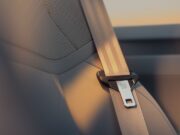
























New research from Volvo Car UK reveals almost 100 seatbelt enforcement notices were issued every day between 2023 and 2025, raising fresh concerns about motorists and passengers failing to buckle up.
Seatbelt offences remain a concern on UK roads
More than 107,000 seatbelt enforcement notices were issued to drivers and passengers across three years, according to new research commissioned by Volvo Car UK.
Freedom of Information requests submitted to police forces revealed 107,969 notices between 2023 and 2025, equivalent to almost 100 every day across the 37 forces that provided data.
Despite decades of road safety campaigns and improvements in vehicle technology, the figures suggest that a significant number of motorists and passengers continue to travel without one of the simplest forms of protection available.
The research also found that, among police forces supplying comparable historical figures, seatbelt enforcement notices were 39% higher in 2025 than in 2019.
What do the latest figures reveal?
Volvo’s research identified the following annual enforcement totals:
| Year | Enforcement notices |
|---|---|
| 2023 | 35,363 |
| 2024 | 37,067 |
| 2025 | 35,539 |
| Total | 107,969 |
Although the number declined slightly in 2025, the overall figures underline the continuing challenge of encouraging consistent seatbelt use.
Among 21 police forces providing comparable figures over a longer period, notices increased from 10,194 in 2019 to 14,164 in 2025. The highest figure was recorded in 2024, when 17,253 notices were issued.
Where were the most offences recorded?
West Yorkshire reported the highest number of enforcement notices in 2025, followed by Devon and Cornwall, West Mercia and Greater Manchester.
| Police force | 2025 notices |
|---|---|
| West Yorkshire | 5,062 |
| Devon and Cornwall | 2,874 |
| West Mercia | 2,516 |
| Greater Manchester | 2,509 |
However, differences in police resources, enforcement activity and reporting practices mean these figures should not necessarily be interpreted as a direct comparison of driver behaviour between regions.
How important is wearing a seatbelt?
Department for Transport road casualty statistics provide a stark reminder of the potential consequences.
In 2025, approximately one in four car occupants killed in reported road collisions in Great Britain were not wearing a seatbelt, among those whose seatbelt status was known.
Seatbelts help restrain occupants during a collision, reducing the likelihood of serious injuries caused by contact with the vehicle interior or being thrown from the vehicle.
They remain an essential safety feature, even in modern cars equipped with sophisticated airbags and electronic protection systems.
How has Volvo helped improve seatbelt safety?
Volvo’s involvement in seatbelt technology stretches back to 1959, when the Swedish manufacturer introduced the modern three-point seatbelt as standard equipment.
Rather than restricting the technology to its own vehicles, Volvo made the patent available to other manufacturers without charge, helping establish the three-point belt as a fundamental feature of modern vehicle safety.
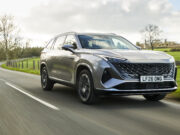
That commitment continues with the new fully electric Volvo EX60, which introduces what the manufacturer describes as the world’s first multi-adaptive safety belt.
The technology uses real-time information from vehicle sensors to adjust occupant protection according to the circumstances of a collision.
By adapting restraint characteristics to different situations, the system aims to offer more personalised protection than conventional seatbelt designs.
What is Volvo’s message to UK motorists?
Nicole Melillo Shaw, Managing Director of Volvo Car UK, emphasised the importance of everyday seatbelt use.
“Every journey is different, but taking a few seconds to put on a seatbelt is one simple step that can offer vital protection.”
Nicole Melillo Shaw, Managing Director, Volvo Car UK
Volvo’s message is straightforward: advances in automotive safety technology can improve occupant protection, but drivers and passengers must still take responsibility for wearing their seatbelts.
MOTORING ECHO TOP TIPS — SEATBELT SAFETY
- Buckle up before moving: Every occupant should wear a seatbelt, including passengers in the rear seats.
- Check the fit: Position the lap belt low across the hips and the diagonal belt across the chest and shoulder.
- Never share a seatbelt: Each occupant must have their own correctly fitted restraint.
- Secure children properly: Use an appropriate child car seat or booster seat in accordance with UK regulations.
- Don’t rely on airbags alone: Airbags are designed to work alongside seatbelts, not replace them.
Motoring Echo Verdict
Almost seven decades after Volvo helped introduce the modern three-point seatbelt, its latest research demonstrates that one of motoring’s most important safety innovations is still being overlooked.
The development of adaptive restraint technology in vehicles such as the Volvo EX60 represents another step forward in occupant protection. Yet the greatest benefit of any seatbelt remains dependent on one simple action — wearing it.
For motorists and passengers alike, buckling up should never be optional.
Source: Volvo Car UK Freedom of Information research and Department for Transport road casualty statistics, as supplied by Volvo.